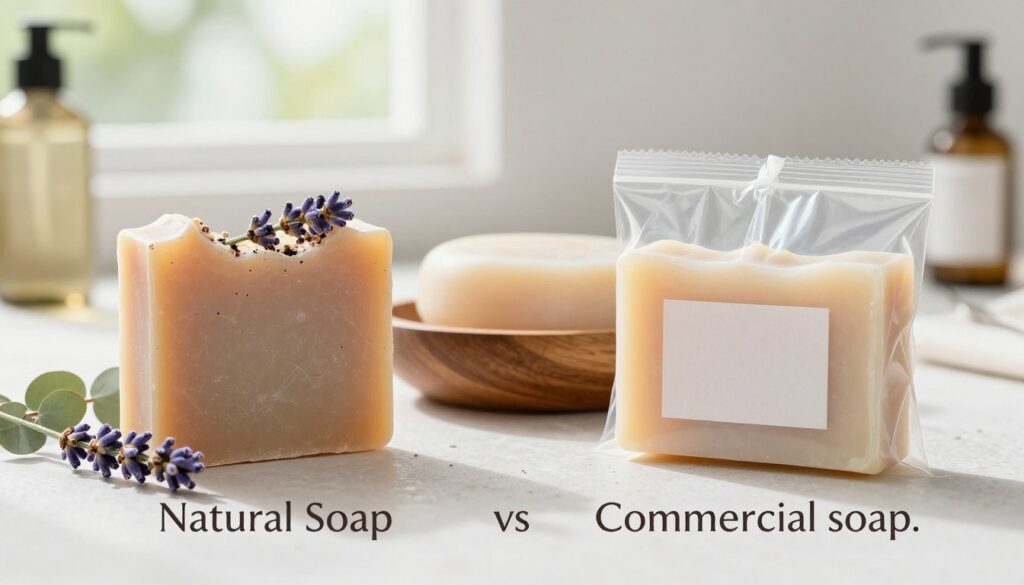
Natural Soap vs Commercial Soap
Choosing the right cleanser for your skin can feel overwhelming. There are so many options on store shelves. Understanding the differences between Natural Soap And Commercial Soap is key to better skin health.
Many people wonder about the true impact of their daily wash. Mass-produced bars offer convenience but often have synthetic detergents. These detergents can strip away moisture. On the other hand, a natural soap nourishes your skin with plant-based oils and glycerin.

This guide explores the natural soap vs commercial soap debate. We’ll look at how the market has shifted toward cleaner ingredients. We’ll also see why commercial soap is still popular in many homes.
By the end of this article, you’ll feel confident in choosing products that meet your wellness goals. Let’s explore what makes these cleansers unique. Your skin will thank you for the switch.
Key Takeaways
- Mass-produced bars often use synthetic detergents instead of traditional fats.
- Artisanal options retain natural glycerin, which helps hydrate the skin.
- Reading labels is essential to identify harsh chemicals in your beauty routine.
- Switching to cleaner alternatives can significantly improve skin texture over time.
- Understanding ingredient lists empowers you to make healthier personal care choices.
Understanding the Chemistry of Natural Soap And Commercial Soap
The main difference between natural and commercial soap is in how they’re made. Both clean your skin, but they use different ways to do it. Knowing this helps you pick the right soap for you.
The Saponification Process in Handmade Soaps
Natural soap is made through saponification. This is a chemical reaction. It mixes fats or oils with an alkali, like sodium hydroxide.
This mix turns into a soft, good cleaner. It also makes glycerin, which keeps your skin moist. This method makes a soap that’s gentle and doesn’t have bad stuff in it.
Synthetic Detergents and Surfactants in Commercial Bars
But, most commercial soap isn’t really soap. It’s synthetic detergent bars. These are made in labs to clean like soap but don’t have natural benefits.
These synthetic ingredients clean well but can dry out your skin. By picking natural soap, you skip these harsh chemicals. Your skin will thank you.
The Impact of Ingredients on Skin Health
Your skin is like a shield. But, the products you use can help or hurt it. Knowing the importance of ingredients in soap is key to better skin. When you read your soap’s label, you might see names that harm your skin.
The fight between natural soap vs commercial soap is about what’s in them. Mass-market soaps last long but can dry out your skin.
Common Harsh Chemicals to Avoid in Commercial Products
Many soaps use fake stuff for foam and smell. Parabens and phthalates are in commercial soap and can irritate your skin. They mess with your skin’s pH, making it dry and red.
Artificial foaming agents like sodium lauryl sulfate also harm your skin. They take away the oils your skin makes. By avoiding these, your skin stays healthy and strong.
The Role of Natural Oils and Butters in Skin Hydration
Natural soap uses plants to help your skin. It has shea butter and coconut oil. These give your skin deep hydration.
Choosing natural soap means giving your skin vitamins and antioxidants. They keep moisture in, making your skin soft and smooth. Using these ingredients helps protect your skin from dryness.
Environmental Consequences of Soap Production
What we choose in the shower affects our planet. Many focus on skin health, but the making of soap is key. Knowing the environmental impact helps us choose better for the earth.
Biodegradability and Water Pollution Concerns
Many items use synthetic surfactants that don’t break down. Using commercial soap means these chemicals go into our water. This harms our oceans and the creatures in them.
Natural soap is made from plant oils that break down easily. Choosing these products keeps our waters clean. Switching to sustainable soap reduces harm to our environment.
Sustainable Sourcing of Ingredients
What’s in your soap is as important as how it’s made. Palm oil, for example, can cause deforestation. Good brands choose ingredients that don’t harm the earth.
Look for eco-friendly soap options that use sustainable palm oil. Supporting these brands helps protect our planet. Choosing eco-friendly soap makes a big difference in our world.
Benefits of Natural Soap for Sensitive Skin
If you have chronic skin irritation, the answer might be in your soap. Many people find their skin problems come from harsh ingredients in common soaps. Learning about the benefits of natural soap can help you get healthy, comfy skin.

Why Chemical-Free Soap Benefits Eczema and Psoriasis
People with eczema or psoriasis often have damaged skin. Most supermarket soaps have sulfates and preservatives that dry out the skin. Choosing chemical-free soap benefits lets your skin heal without harsh chemicals.
These soaps clean gently and keep the skin’s pH balance. Many users see less redness and itching after switching. Getting rid of these irritants helps manage skin problems and keeps it healthy.
The Importance of Essential Oils vs Synthetic Fragrances
Fragrances in commercial products often cause skin problems. Synthetic scents may smell good but can have hidden chemicals. On the other hand, handmade soaps benefits include using real essential oils.
Essential oils like lavender or chamomile calm the skin without causing allergies. Using natural soap with plant scents makes showering a relaxing time. Prioritizing purity over strong smells is good for your skin.
The Truth About Commercial Soap Marketing
Looking beyond the shiny packaging is key to understanding the difference between natural and commercial soap. Big companies spend a lot on ads to make you think their soaps are soft and good for you. But, the truth about these mass-made bars is often far from the calm pictures in ads.
Decoding Labels and Hidden Ingredients
The importance of ingredients in soap is huge for keeping your skin safe. Many commercial soaps have long, hard-to-pronounce names. These names hide harsh chemicals or foaming agents that can hurt your skin.
Take a moment to check your soap’s label. If it has sodium lauryl sulfate or parabens, it’s likely full of synthetic stuff, not real soap. Knowing how to spot these hidden chemicals helps you make better choices for your skin.
Why Mass-Produced Bars Often Strip Natural Oils
When we compare natural soap to commercial soap, glycerin is a big difference. Big companies often take glycerin out of soap to sell it for expensive lotions. This leaves a bar that dries out your skin.
Handmade, natural soap keeps glycerin, which helps keep your skin moist. By picking products that keep these good things, you can keep your skin healthy. Reclaiming control over your skin care starts with knowing what you put on your body every day.
Advantages of Choosing Organic Soap
Choosing organic soap is good for you and the planet. Many people wonder why choose natural soap over regular soap. It’s because natural soap is made with pure ingredients and is made with care.
By picking organic soap, you get organic soap advantages that help you stay healthy. These soaps are made with love, making sure each ingredient is good for your skin.

Pesticide-Free Farming and Skin Safety
One big chemical-free soap benefit is no synthetic pesticides or herbicides. Regular soap might have chemicals from farming. But organic soap keeps your skin safe from these.
Organic farming means your skin doesn’t get toxins. This is great for people with sensitive skin. Pure, plant-based ingredients make your shower better and safer.
Supporting Ethical and Small-Scale Producers
Buying natural soap helps the economy too. Small makers focus on quality, making better soap. They use oils and butters from fair-trade places.
When you buy natural soap, you help the soap industry get better. You support your health and the makers’ jobs. Choosing organic soap is good for you and the world.
How to Identify High-Quality Handmade Soaps
Finding a top-notch soap takes a careful eye and some detective work. With many choices, it’s easy to get lost in marketing. Knowing the handmade soaps benefits helps you pick what’s best for you.
Key Indicators of Authentic Cold-Process Soap
Real cold-process natural soap has unique textures and colors. Since it’s made in small batches, each bar is different. Look for a rustic edge or uneven surface, signs of true craftsmanship.
The ingredient list should show saponified oils like olive, coconut, or palm. A good handmade soap will list specific oils, not just “surfactants” or “detergents.” These oils keep their natural glycerin, making them better for your skin than others.
Avoiding Greenwashing in the Soap Industry
Some companies use fancy words to seem eco-friendly but aren’t. This is called greenwashing. To get the real organic soap advantages, look beyond the label.
Always check the back of the box for details. If a brand doesn’t list its ingredients or uses fake fragrances, it’s not real organic soap. Choosing transparent brands means your natural soap supports makers who care about your health, not just making money.
Comparing Cost and Longevity
Looking at the real value of soap means more than just the price. Many think natural soap costs too much at first. But, the real cost per use is much lower when you think about the quality of the ingredients.
Is Natural Soap More Expensive in the Long Run?
Buying commercial soap often means paying for water and fake stuff that goes away fast. These bars melt quickly, so you need to buy more often. On the other hand, eco-friendly soap is made with real plant oils that last longer.
Because these bars have more good stuff and less air, they last longer. One premium soap bar can last as long as two or three cheap ones. This means you spend less money but get better care for your skin.
Storage Tips to Extend the Life of Your Soap
Keeping your soap right is key to making it last. The biggest problem is water, which makes soap soft and melt. Use a draining soap dish to keep air around the soap.
Don’t let your soap sit in water when not in use. If your bathroom is small, store extra soap in a cool, dry spot. These easy steps help your natural soap stay good for longer. This shows you don’t have to spend more to get quality.
Popular Natural Soap Brands to Consider
Finding the right products for your daily routine can feel overwhelming. If you are ready to upgrade your skincare, these reputable companies offer some of the best natural soap brands available. Each of these options provides a pure soap experience that prioritizes both your health and the environment.
Dr. Bronner’s Pure-Castile Liquid Soap
This brand is widely recognized for its incredible versatility and commitment to organic ingredients. Their liquid natural soap is a staple in many households. It can be used for everything from washing your body to cleaning your home. It is a highly concentrated formula that offers great value for those looking to simplify their supply closet.
Shea Moisture Raw Shea Butter Soap
If you struggle with dry or tight skin, this brand is often considered the best soap for deep hydration. Their bars are packed with raw shea butter. This helps to lock in moisture while gently cleansing the skin. You will notice that your skin feels softer and more nourished after every single wash.
Mountain Rose Herbs Handmade Bars
For those who value traditional craftsmanship, this brand stands out for its dedication to quality. They produce exceptional handmade soap using high-quality botanicals and essential oils. Choosing these bars means you are supporting ethical production and small-scale farming practices that respect the earth.
Transitioning to a Sustainable Soap Routine
Choosing sustainable soap is good for your skin and the planet. You don’t need to change everything at once. Start with small steps to keep your skin happy and adopt better habits.
How to Switch Without Irritating Your Skin
Using natural soap might take some getting used to. Start by adding one new product at a time. This helps you see how your body reacts to different ingredients.
Do a patch test on your inner arm before using a new soap. This way, you can see how your skin feels. If it gets red or dry, try a different soap that fits your skin better.
Creating a Minimalist Bathroom Environment
A minimalist bathroom is more than looks. It’s about living intentionally. Clearing clutter makes your bathroom peaceful and clear.
Think about why you choose natural soap over many plastic bottles. It’s because natural soap is simple and effective. Keep only what’s good for you and the planet. This way, you appreciate your soap more and help the environment.
Conclusion
Changing your daily routine can make your skin and the planet healthier. Using natural soap lets you care for your skin and the earth at the same time.
You know now how to pick the right soap for you. Choose soaps that make your skin happy and are good for the planet. This way, your bathroom stays clean and green.
Look for top natural soap brands like Dr. Bronner’s or Mountain Rose Herbs. They offer a cleaner, better soap experience than regular bars.
Your skin needs gentle care from plant oils and organic extracts. Begin a kinder lifestyle by picking products that are good for you and the earth.