How to Start a Soap Business from Home (Step-by-Step Ultimate Guide)
How to Start a Soap Business from Home (Step-by-Step Ultimate Guide)
Starting a thriving venture is exciting. Many start by making small batches at home. They soon find out people love their work.

Starting a soap making business is more than loving scents and textures. It needs a clear plan and quality focus. With a good plan, you can turn your hobby into a soap business that shines.
This guide is your roadmap to success. We’ll cover everything from finding ingredients to following local rules. Let’s start building a brand that shows your creativity and commitment to quality.
Defining Your Niche and Brand Identity
Your brand identity is like the heart of your handmade soap company. It’s what makes you different from others. By knowing who you are, your soap business can stand out in a busy market.
Identifying Your Target Audience
To succeed with your organic soap business, you need to know who wants your products. Look at what your customers need, like people with sensitive skin or those who care about the environment. Tailor your products and marketing to meet their needs.
Make a customer profile to see who you want to sell to. Are they busy parents or luxury lovers? Focusing on a specific group helps you build loyalty and get more sales.
Developing a Unique Brand Story
People buy more than just soap; they buy the story behind it. Your brand story should explain why you started your soap business and what drives your passion. This creates a strong bond with your customers.
Be real about how you make your soap and your commitment to natural ingredients. Talk about what makes your brand special, like sustainability or traditional methods. Being open builds trust with your customers.
Choosing a Business Name and Visual Identity
Your name is the first thing people notice, so pick something memorable and fitting for your brand. A good name for an organic soap business should be easy to remember and available online. It should show what your products are all about while being professional.
After picking a name, work on your visual identity. This includes your logo, colors, and packaging. These should all tell the same story. A consistent look helps your soap company look professional as it grows.
Navigating Legal Requirements and Business Registration
Before you start making soap, you need to follow some legal steps. This makes sure your soap business is safe as it grows. Doing this early helps you avoid problems and focus on making great soap.
Selecting a Business Structure
Choosing the right legal structure is key for your soap making business. Many start as a sole proprietorship because it’s easy. But, an LLC might protect your stuff better.
Talk to a tax expert to pick the best one for you. The right choice helps with taxes and looks good to customers.
Registering Your Business and Obtaining Licenses
After picking a structure, register your small business soap with the state. You’ll need to file papers and get an EIN from the IRS. An EIN lets you open a business bank account and hire people later.
Also, check if your area needs a home occupation permit. This is important for any organic soap business to follow local laws.
Understanding FDA Regulations for Soap
The soap industry has its own rules, especially for labels. The FDA says soap and cosmetics are different based on what’s in them and what they say on the label.
If your soap cleans skin, it’s usually just soap. But, if it moisturizes or treats skin issues, it might be a cosmetic or drug. Always check the FDA rules to make sure your soap making business is safe and follows the law.
Mastering the Art of Small Batch Soap Production
Doing small batch soap production helps you keep quality high. You make fewer soaps at a time. This way, every soap meets your high standards before it’s sold.
This method lets you try new scents and textures. You don’t have to worry about wasting a lot of soap.
Selecting Your Soap Making Method
Picking the right soap making method is key. The cold process method is popular. It lets you control every ingredient, making a long-lasting soap.
This method needs a curing time. This makes your soap special and adds to its artisan charm.
The melt-and-pour method is good for beginners. It’s faster because you melt a pre-made base. This method is great for learning about design and fragrances before moving to harder techniques.
Sourcing High-Quality Ingredients
Using top-notch ingredients makes your soap stand out. Choosing organic soap ingredients boosts your brand’s value. People want natural ingredients like shea butter and coconut oil.
Working with reliable suppliers keeps your soap quality consistent. Make sure your essential oils and botanicals are pure. Using the best ingredients gives you an edge over competitors.
Developing Your Signature Recipes
Your recipes make your brand unique. Start by trying different oil mixes. See how they change the soap’s feel and moisturizing power.
Keep notes on each batch. This helps you know what your customers like best. Being creative with your recipes is key. You might make bars for sensitive skin or exfoliating scrubs. Your perfect recipe will be the heart of your business.
Setting Up Your Home Soap Studio
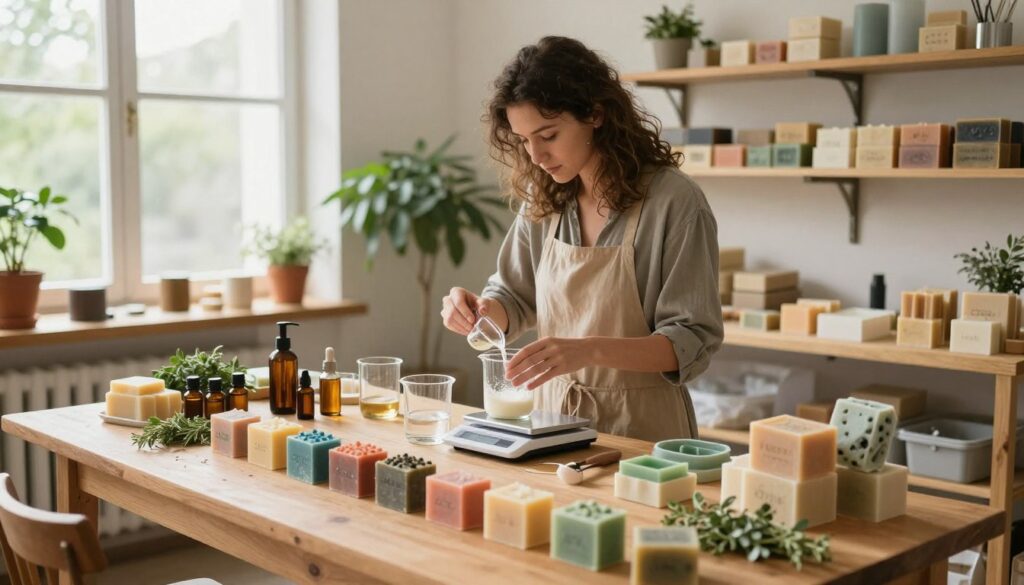
Your home studio is the heart of your artisan soap business. It’s where creativity and precision meet. Having a dedicated area keeps your work organized and professional.
By separating your studio from your living space, you protect your home. This also helps you focus on your craft.
Designing a Safe and Efficient Workspace
A good studio is key to making great small batch soap. Make sure it has good air flow. This could be a room with a window or a strong exhaust fan.
Choose work surfaces that are easy to clean. Stainless steel or heavy-duty plastic are good choices.
Being organized is important for efficiency. Store your materials in labeled containers on strong shelves. This helps you avoid accidents and keeps your soap making smooth.

Essential Equipment for Artisan Soap Making
To make top-notch natural soap, you need the right tools. A precise digital scale is crucial for measuring ingredients. You’ll also need a good immersion blender for the perfect soap texture.
Other important items include heat-resistant spatulas, stainless steel pots, and strong soap molds. Quality equipment from the start helps avoid problems. Always have a thermometer ready to check temperatures.
Maintaining Hygiene and Safety Standards
Keeping safe is always first when running an organic soap business. Wear safety goggles, gloves, and long sleeves to protect yourself. Have vinegar ready to clean up lye spills fast.
Keeping your space clean is as important as staying safe. Sanitize your tools and surfaces often. Use food-grade alcohol or a mild bleach solution. By following these rules, you make sure your soap is safe and of high quality.
Pricing Your Natural Soap Products for Profit
Pricing your handmade soap right is key to making a living from your hobby. Many makers focus on making soap, but knowing your costs is crucial. A good pricing plan keeps your business thriving for a long time.
Calculating Cost of Goods Sold
To price well, you need to know your Cost of Goods Sold (COGS). This includes all the ingredients and packaging for your natural soap. Don’t forget small costs like labels and twine, as they add up fast.
Also, remember your time is valuable. Even if you work alone, your work has a cost. Keeping track of these costs helps you set a fair price for each bar.
Determining Your Profit Margins
After figuring out your COGS, you can find your profit margins. A good margin covers your costs and leaves room for growth. Running an artisan soap business means aiming for a margin that supports your lifestyle and growth plans.
Many makers use a formula to keep prices right. Setting a consistent margin helps avoid underpricing, which can harm your brand. Your profit is your reward for your hard work and quality.
Researching Market Rates for Handmade Soap
Lastly, check the soap industry to see how your prices stack up. Looking at what handmade soap costs in the US helps you price right. You want to be competitive but not lose money.
See what other premium brands charge for similar natural soap products. If your soap is organic or made with extra care, charge more. Believe in your pricing because you know your product is worth it.
Building an Online Presence for Your Soap Business
Your online presence is like a digital store for your brand. It helps you reach more customers than just your local area. This is key for any artisan soap business wanting to grow.
Creating a Professional E-commerce Website
Your website is the main place for your natural soap products. Sites like Shopify or Squarespace make it easy to show off your products. Make sure it works well on phones, since many people shop on their phones.
Make buying easy to keep people from leaving their carts. Write clear descriptions of your organic soap to build trust. Don’t forget to add an “About Us” page to share your story.
Leveraging Social Media for Brand Awareness
Social media helps you connect with your audience. Use Instagram and Pinterest to share your artisan soap making process. Talk to your followers to build a loyal community.
Be consistent online to build your reputation. Share posts about your ingredients to show your knowledge. Stay active to keep your brand in people’s minds when they look for natural soap.
Photography Tips for Unique Soap Creations
Good pictures are key to selling your products. Always use natural light to avoid harsh shadows. This makes your products look professional and appealing.
Try using props like dried flowers or wooden boards to add style. Close-up shots of your unique soap creations can really help sell more. Good photography makes your brand stand out online.
Developing Effective Marketing Strategies
Marketing your handmade soap well is key to making it a profitable soap business. Your products are great, but they need to be seen by the right people. A good plan keeps your brand in mind for those who might buy.
Utilizing Email Marketing to Build Customer Loyalty
Email marketing is a strong tool for staying close to your audience. By sending out newsletters, you can share stories and give special deals. This makes a genuine connection and gets people to buy from you again.
Use emails to tell about your newest unique soap creations. Keeping customers in the loop about new scents or collections builds excitement. Feeling like they’re part of something special makes them more likely to stick with you.
Collaborating with Influencers and Local Partners
Reaching more people means going beyond your usual circle. Working with local influencers who share your values can introduce your natural soap products to more people. These partnerships show your products are trusted and valued.
Think about teaming up with local shops or wellness centers to show off your items. Working together without spending a lot on ads is smart. Helping each other out makes a stronger community for all.
Participating in Craft Fairs and Farmers Markets
Meeting customers in person is unbeatable. Being at local craft fairs and farmers markets lets you get feedback right away. People enjoy smelling and touching your handmade soap before buying.
These spots are great for finding loyal customers. You can get email addresses and turn casual visitors into true fans. Personal interaction often convinces someone to become a loyal customer.
Managing Inventory and Scaling Your Soap Company
As your soap business grows, you need to focus on being efficient and growing well. Moving from making soap at home to a real business takes planning. You must keep the quality your customers love.
By improving how you work, you can make more soap without losing your special touch. This is what makes your brand unique.

Streamlining Production Processes
To grow your handmade soap company, make your making process faster. Use a set way of working to make more soap without losing quality. Think about getting bigger molds or machines to cut soap faster.
Make similar scents together to save time cleaning. This way, you can make more soap quickly and still keep it perfect.
Managing Supplies and Raw Material Storage
Good inventory management is key for a successful soap business start-up. Keep track of things like lye, oils, and fats with a spreadsheet or software. This stops you from running out of important stuff when you’re busy.
Keep your storage area tidy to use older stuff first. This keeps your ingredients fresh. A cool, dry place is important to protect your supplies. Being organized saves money by cutting down on waste and avoiding last-minute buys.
Planning for Future Growth and Expansion
Scaling your small business soap means having a plan for the future. Look at your sales to see what sells best at different times. This helps you plan ahead.
As your soap company gets bigger, you might want to make more products or sell to stores. Always think about your future when you make big decisions. With a good plan, your business can keep growing and making money for a long time.
Conclusion
Starting a home business needs creativity and planning. You now have the tools to make your kitchen soap dreams real. This can be a profitable business that people love.
The soap world values quality and being open. Using natural stuff and caring for the planet makes your soap special. It stands out from the big brands.
Work hard to make your soap unique. This will help you get and keep customers. Every soap you make shows your hard work and talent.
Running a soap business means being creative and organized. Keep learning new things and listen to what your customers say.
Your adventure as an entrepreneur is starting. We can’t wait to see your business grow in the world of handmade goods.