Branding Techniques for Organic and Natural Soap Items
Branding Techniques for Organic and Natural Soap Items
With practical examples and doable actions, learn how to create a strong, trustworthy brand that draws in devoted clients.
Overview: The Significance of Branding Techniques for Organic and Natural Soap Items
Since everyone claims to be “pure,” “natural,” or “artisan,” natural and organic soap products cannot compete on the basis of ingredients alone in a crowded market. The differentiator that makes a product a preference is branding.
Good branding benefits you:
Branding Techniques for Organic and Natural Soap Items
In an area where skepticism is prevalent, cultivate trust
Express value above and beyond cost.
Establish an emotional bond to encourage recurring business.
However, branding is a strategic system that influences perception and influences purchasing decisions; it is more than just a logo or catchphrase.
1. Establish a distinct brand identity
Identity—who you are, who you serve, and what you stand for—is the foundation of a powerful brand.
a. Recognize Your Target Market
Organic consumers are diverse. Divide them up:
Skin-friendly ingredients are prioritized by health-conscious consumers.
Environmentally conscious consumers are concerned about sustainability and waste reduction.
Rituals and high-end experiences appeal to luxury seekers.
Different pricing, images, and messaging work well for each segment. Impact is diminished by a one-size-fits-all strategy.
Create customer personas (age, motives, concerns, and purchasing patterns) as an actionable step. For instance:
Sarah, a 32-year-old urban professional, is willing to pay an additional 20% for proven clean formulations and purchases organic soap to avoid toxins.
b. Establish Your Brand for Organic and Natural Soap Items
b. Establish Your Brand
Select a non-generic positioning. Position examples:
“Suggested by a dermatologist and certified organic”
“Reusable soap with zero waste for eco-minimizers”
“Exquisite handmade soaps made with botanicals from around the world”
Credibility is key; unsubstantiated claims and ambiguous terms like “natural” without certification undermine credibility.
2. Create a Resonant Brand Story
Customers purchase stories as well as goods. Storytelling by great brands fosters connection and trust.
Components of an Engaging Brand Story for Soaps
Origin of the Founder: Why did you begin? (Reactions to allergies? Love for making soap the old-fashioned way?)
Ingredient Journey: What is the origin of ingredients? How are they chosen?
Impact Story: How does your brand evolve? (More plastic? assisting regional farmers?)
For instance, the Meow Meow Tweet presents the brand as genuine and purpose-driven by sharing the founder’s journey from dermatological issues to developing plant-based soaps using botanicals sourced sustainably.
Take Action:
In 150–300 words, write and polish your brand story. Check for emotional impact with your target audience.
3. Create a Visual Identity That Expresses Your Brand for Organic and Natural Soap Items
The expectations of your target audience and brand positioning must be reflected in your visual design.
Important Visual Components
Logo: straightforward, identifiable, and significant
Color scheme: jewel tones for luxury, earthy tones for eco-brands, and whites for clinical purity
Typography: Handcrafted scripts for an artisan feel; clean and readable for a modern aesthetic
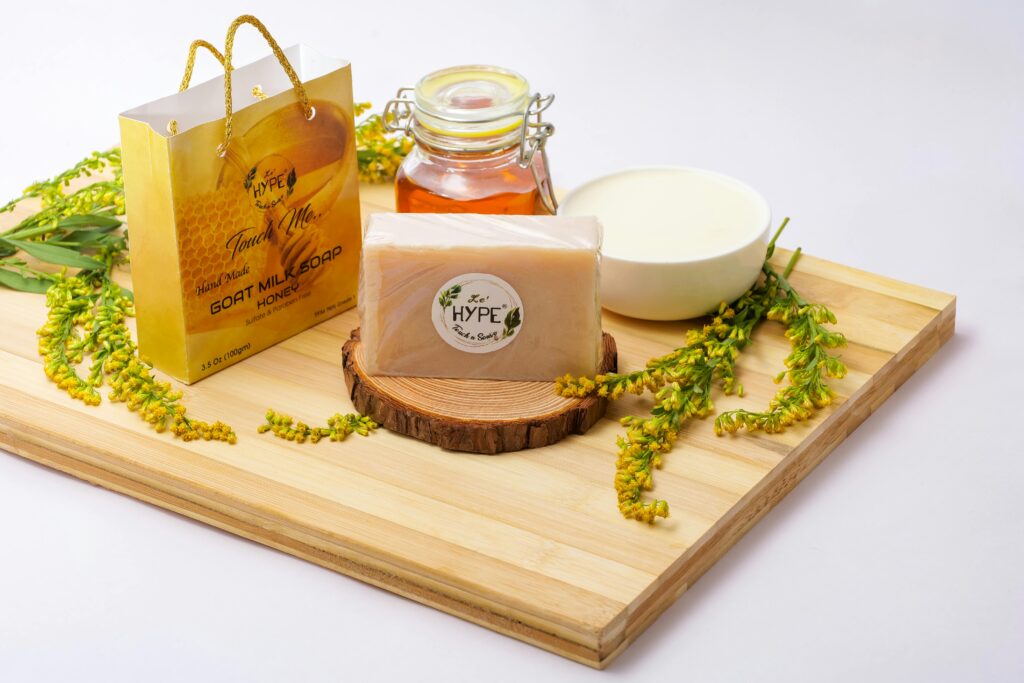
Materials for packaging: glass, compostable wraps, and recycled kraft paper
Real-World Example
Bold colors and recyclable packaging are used by Ethique (solid soaps) to convey fun and sustainability.
4. Make Use of Reliable Social Proof
To highlight openness and moral values, Dr. Bronner’s employs thick text and a vintage typeface.
There is a lot of “greenwashing” in organic markets. Verifiable credibility is the antidote.
Social Proof Types
Third-party certifications include Leaping Bunny (cruelty-free), Ecocert, and USDA Organic.
User endorsements and reviews: Emphasize authentic user experiences
Be strategic when it comes to press mentions and influencer endorsements because macro influencers aren’t always superior to subject-matter experts.
Data Insight: 88% of buyers place as much trust in internet reviews as in word-of-mouth referrals, per Bright Local.
If there aren’t many reviews for your brand, offer discounts or freebies to encourage candid comments.
5. Use content to tell people about your brand
Content marketing builds trust and authority, which is very important when customers look at claims about natural products.
High-Impact Content Types for Organic and Natural Soap Items
Ingredient education: Why coconut oil? Why no sulfates?
How-to videos: Best way to use and store soaps
Blog posts: Skin care tips, seasonal guides, sustainability insights
Example Content Titles
“5 Things Your Soap Label Isn’t Telling You”
“How to Decode Organic Certifications”
“Zero-Waste Bathroom Swaps That Work”
6. Leverage Strategic Partnerships
Partnering expands reach and enhances legitimacy.
Smart Collaborations
Eco subscription boxes — a way to introduce products to niche buyers
Boutiques and spas — physical retail anchors credibility
Complementary brands (lotions, bath salts) — cross-promote
Case in point: A small brand featured in the Eco Wellness Box saw a 30% increase in email list signups within a month of inclusion.
7. Choose Distribution Channels That Fit Your Brand
Your distribution must reflect your positioning.
Positioning Best Channels
Eco & minimalist Online store, eco marketplaces, subscription box partnerships
Luxury & boutique High-end retail, spa partnerships, direct events
Mass organic Larger health stores (Whole Foods, Nourish Market), Amazon
Avoid channels that dilute perceived value (e.g., deep-discount marketplaces) unless your strategy explicitly targets price-sensitive segments.
Conclusion:
Build a Brand That Means Something
Branding for natural and organic soap products isn’t optional — it’s strategic. Good branding turns commodity into preference and loyalty.
Quick Checklist Before You Launch
➡️ Clear target audience
➡️ Credible positioning and certifications
➡️ Story that connects emotionally
➡️ Visual identity that aligns with values
➡️ Content strategy for education + trust
➡️ Measurable distribution plan
Call to Action
Start with one step: write your brand story today. Then build your visuals and messaging around it. Authenticity is your best competitive edge — because consumers in this space can smell inauthenticity a mile away.